
Introduction: When Your Bite Starts Affecting More Than Your Smile
A straight smile is often the first thing people think about when they hear the word orthodontics. But orthodontic treatment is not only about how teeth look. It can also play an important role in how teeth fit together, how evenly pressure is distributed, and how comfortably the jaw functions during everyday activities like chewing, speaking, and resting.
For patients in Bryn Mawr and across the Main Line, symptoms like jaw soreness, worn teeth, frequent headaches, clenching, grinding, or uneven biting pressure may point to an underlying bite issue. While orthodontics is not the solution for every jaw-related concern, an orthodontic evaluation can help determine whether misalignment is contributing to the problem.
At Mastaj Orthodontics, treatment planning looks at more than tooth position alone. A healthy smile should look natural, function comfortably, and support long-term dental stability.
What Does Your Bite Have to Do With Jaw Pain?
Your bite is the way your upper and lower teeth meet. When the bite is balanced, chewing forces are shared more evenly across the teeth. When the bite is misaligned, certain teeth may absorb more pressure than they should. Over time, that uneven pressure can contribute to discomfort, tooth wear, muscle fatigue, or increased strain on the jaw joints.
Some patients notice jaw pain right away. Others only notice secondary signs, such as chipped edges, flattened teeth, sensitive teeth, gum recession, or frequent tension in the face and temples. These issues can develop slowly, which is why many adults do not connect them to orthodontic concerns at first.
Common Bite Problems That Can Affect Comfort
Several bite patterns may contribute to functional stress. An overbite occurs when the upper front teeth overlap the lower front teeth more than ideal. An underbite occurs when the lower teeth sit ahead of the upper teeth. A crossbite happens when some upper teeth sit inside the lower teeth instead of outside them. An open bite occurs when the upper and lower teeth do not meet properly in the front or back.
Crowding and spacing can also influence bite function. If teeth are rotated, tilted, or crowded, they may not make contact evenly. This can create isolated pressure points that affect chewing and long-term tooth health.
Not every bite issue causes pain, and not every jaw pain case is caused by orthodontic alignment. However, evaluating the bite is a practical step when symptoms are persistent or unexplained.
Teeth Grinding and Clenching: Where Orthodontics May Fit In
Teeth grinding, also known as bruxism, can have many causes. Stress, sleep patterns, airway concerns, medications, and bite issues may all play a role. Because grinding is often multifactorial, orthodontic treatment should not be presented as a guaranteed cure.
However, if the teeth do not come together evenly, the bite may encourage certain areas to absorb more force. In these cases, orthodontic treatment may help improve alignment and reduce uneven pressure. Some patients may also need a nightguard, dental restoration, or additional evaluation depending on the cause and severity of grinding.
A thoughtful orthodontic consultation can help determine whether tooth position or bite relationship is part of the problem.
Worn Teeth Are Not Just a Cosmetic Issue
Flat, chipped, or uneven tooth edges can make a smile look older, but worn teeth are more than an aesthetic concern. Enamel does not grow back. Once the outer protective layer wears down, teeth may become more sensitive and vulnerable to additional damage.
If wear is caused by bite imbalance, simply repairing the teeth may not address the underlying force pattern. Orthodontic treatment may be recommended before cosmetic dentistry or restorative work so the teeth fit together more favorably.
For adults considering veneers, bonding, crowns, or cosmetic smile improvements, an orthodontic evaluation can be especially valuable. Aligning the teeth first may help protect the final dental work.
How Orthodontic Treatment Can Improve Bite Alignment
Orthodontic treatment gradually moves teeth into healthier positions. Depending on the case, this may be done with braces, clear braces, or Invisalign. The goal is not only to make the teeth appear straighter, but to help them meet in a more balanced and functional way.
For some patients, Invisalign may be an effective option for mild to moderate alignment concerns. For others, braces may provide more precise control, especially when more complex bite correction is needed. The right option depends on the diagnosis, treatment goals, and how much tooth movement is required.
Why Adults Often Notice Bite Problems Later
Many adults in Bryn Mawr search for orthodontic care because their teeth have shifted over time. Even people who had braces as teenagers can experience relapse if retainers were not worn consistently. As teeth shift, the bite can change.
Adults may also become more aware of bite issues when dental work begins to wear, when gum recession appears, or when clenching becomes more noticeable during stressful periods. Orthodontic treatment can help address alignment changes and create a more stable foundation for long-term dental care.
Orthodontics and TMJ: A Careful, Honest Look
TMJ refers to the temporomandibular joint, which connects the jawbone to the skull. TMJ-related symptoms may include jaw clicking, soreness, limited opening, facial pain, or headaches. These symptoms can have several causes, and orthodontic treatment is not the answer for every TMJ concern.
That said, bite alignment may be one factor worth evaluating. If the teeth meet in a way that creates strain or uneven function, orthodontic treatment may be part of a broader care plan. Patients with significant TMJ symptoms may also need evaluation by a dentist, physician, oral surgeon, or other specialist depending on the situation.
What to Expect at a Bite Evaluation
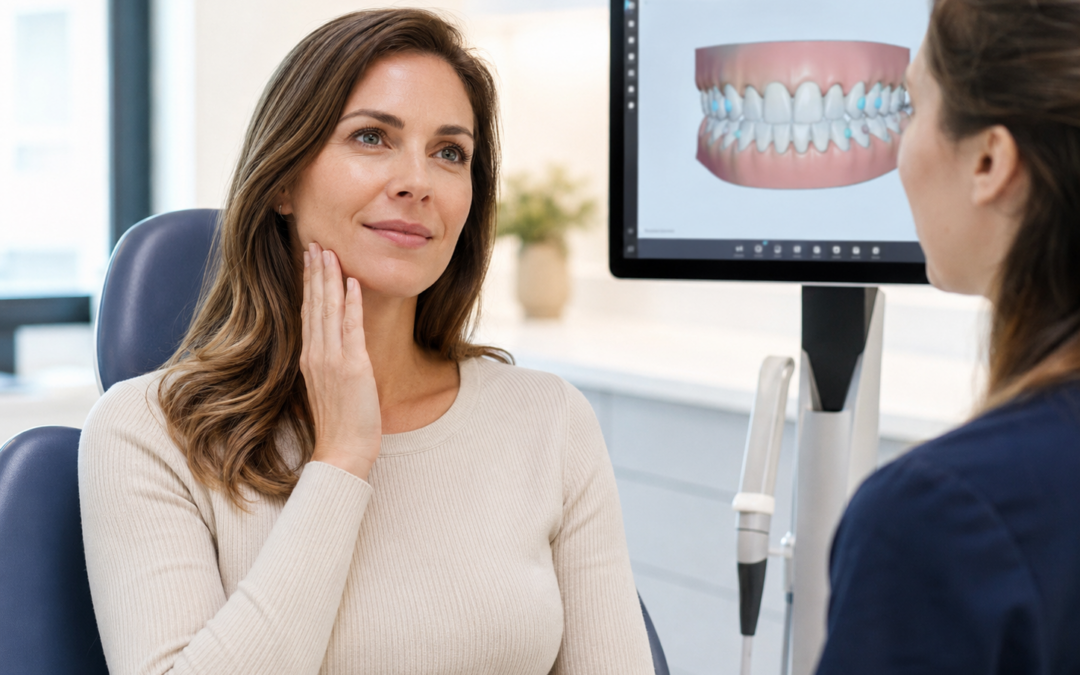
During an orthodontic consultation, the orthodontist will look at how the teeth align, how the upper and lower jaws relate, where the teeth make contact, and whether signs of wear are present. Digital scans, photos, or X-rays may be used to better understand the bite.
Patients should mention symptoms such as jaw soreness, grinding, headaches, tooth sensitivity, chipped teeth, clicking, or difficulty chewing. These details help the orthodontist understand the full picture.
Treatment Options for Bite-Related Concerns
Treatment depends on the cause of the problem. Some patients may benefit from Invisalign, especially when alignment concerns are moderate and the patient can wear aligners consistently. Others may need braces or clear braces for more controlled correction. Some patients may need retainers, bite guards, or coordination with a general dentist for restorative care.
The goal is to recommend the least complicated treatment that can still produce a stable, healthy outcome.
Why Local Orthodontic Care Matters
If you are dealing with jaw pain, grinding, or worn teeth, convenience matters. Orthodontic care often involves periodic visits, progress checks, and adjustments. Choosing a Bryn Mawr orthodontist makes it easier to stay consistent throughout treatment.
Patients across the Main Line often want care that is both clinically thorough and manageable within a busy schedule. Local access can make that process easier.
Schedule a Bite Alignment Consultation in Bryn Mawr, PA
If you are searching for a jaw pain orthodontist in Bryn Mawr, PA, Mastaj Orthodontics can evaluate your smile, bite, and alignment to determine whether orthodontic treatment may help.
Jaw discomfort, grinding, and worn teeth should not be ignored. A consultation can help identify whether your bite is part of the issue and what treatment options may be available. A healthier bite can support a healthier smile, stronger function, and greater confidence over time.