
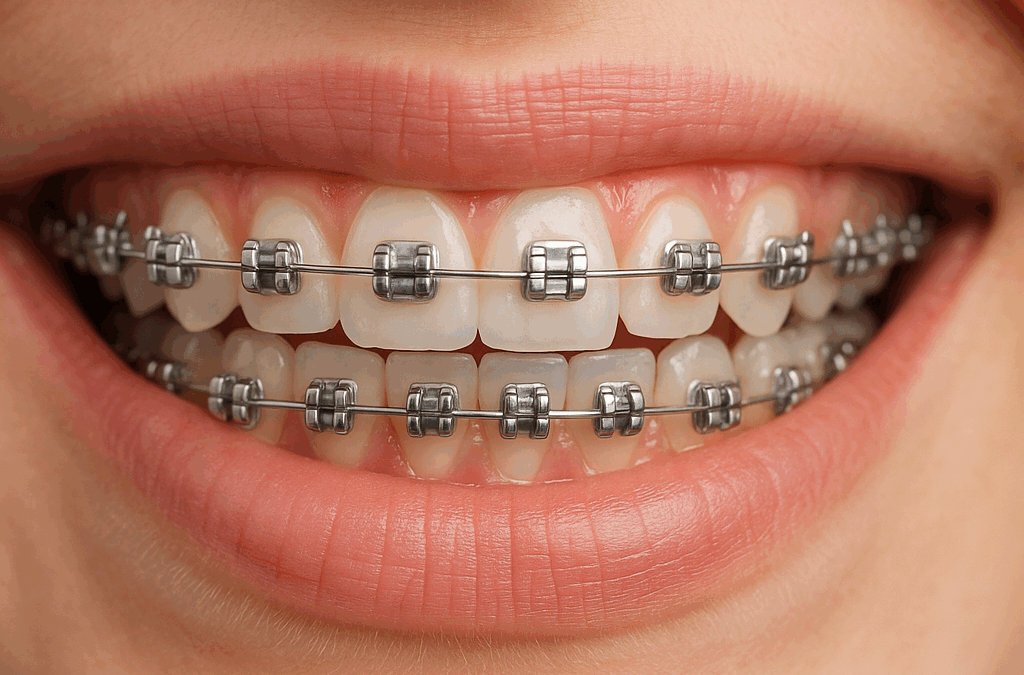
What Happens When Braces Come Off?
When braces come off, many patients feel relieved and excited to finally enjoy their new smile. However, this transition is not the end of orthodontic treatment. One of the most common questions patients ask is, “Do I really need retainers after the braces come off?” The short answer to this question is yes.
Retainers have always been prescribed for braces patients after they get their braces off. In fact, what happens when braces come off plays a critical role in determining how long your teeth stay straight. Without retention, teeth have a natural tendency to shift back toward their original positions.
Dr. Mastaj, a graduate of the University of Pennsylvania and a specialist in orthodontics for over 30 years, offers different types of retainers and often different recommendations on how many hours per day they should be worn, depending on the patient’s treatment and bite.
Why Retainers Matter When Braces Come Off
To understand why retainers are so important when braces come off, it helps to know that teeth are held in place by bone and soft tissue that need time to stabilize. Orthodontic treatment moves teeth into new positions, but the surrounding structures need consistent support to maintain those changes.
Let’s start with the different types of retainers that are available: permanent (fixed) or removable.
According to Dr. Mastaj, a permanent or fixed retainer is one that is glued behind your upper and lower teeth. These retainers are most commonly used on the lower teeth and are recommended in situations where there has been extreme crowding, a deep overbite, or orthodontic retreatment. Fixed retainers can also be used behind the upper front teeth to keep spaces closed. Most patients who undergo braces or Invisalign to close spaces never want to see those gaps return, especially after all the effort involved when braces come off.
A permanent fixed retainer is an excellent solution, but it is important to understand that it is not truly permanent. These retainers can break or loosen. Orthodontists recommend avoiding foods that are too hard, crunchy, or sticky, as they can bend or dislodge the wire. The main benefit of a fixed retainer is that it is always in place. You cannot forget to wear it or lose it. However, patients must be diligent about brushing and flossing around the wire. Poor hygiene can lead to cavities, plaque buildup, gum swelling, and bleeding.
Removable Retainers After Braces Come Off
Removable retainers are another popular choice after orthodontic treatment and are commonly prescribed when braces come off.
Traditionally, the Hawley retainer has been used. This retainer consists of a wire and acrylic component that fits around the front teeth and rests against the roof of the mouth. Hawley retainers typically need to be worn full time for at least one year to ensure teeth remain stable.
Clear retainers, often similar in appearance to Invisalign aligners, are another widely used option. These retainers have no wires and are very discreet. They do an excellent job holding teeth in place after treatment. However, they can stretch over time and may need to be replaced periodically. Many patients find clear retainers more comfortable because they do not touch the roof of the mouth. Because they are effective, they are often worn at night or for approximately 12 hours per day once the initial retention phase has passed.
In Dr. Mastaj’s book, Healthy and Beautiful At Any Age: Your Smile and Modern Orthodontics, she explains that clear retainers do more than just maintain straight teeth after when braces come off. They can also double as bleaching trays and night guards for patients who clench or grind their teeth.
One important point patients often overlook is that retention is not temporary. Teeth continue to shift throughout life due to aging, muscle pressure, and natural changes in the jaw. This is why orthodontists emphasize the importance of consistent retainer wear long after when braces come off, even if teeth appear stable at first.
Research on Retainers and Long-Term Results
No matter what type of retainer you or your orthodontist chooses, wearing it exactly as prescribed is essential after when braces come off.
A landmark research study conducted by the University of Washington Orthodontics Department in the 1990s examined thousands of orthodontic patients who were in the retention phase. The study found one critical factor in keeping teeth straight after braces were removed: consistent retainer wear.
Patients who followed their retainer instructions maintained their results. Those who did not experienced unwanted tooth movement.
The bottom line is that retainers protect the investment you made in your smile. Orthodontic treatment requires time, commitment, and financial resources. Wearing your retainer as directed ensures that the results achieved when braces come off last for years to come.
Follow us on Facebook